How to Price Your SaaS Product as an AI Startup in 2026
Pricing is a growth lever, not an afterthought. Here's how AI startups can set prices that cover costs, beat competitors, and scale.
· 7 min read
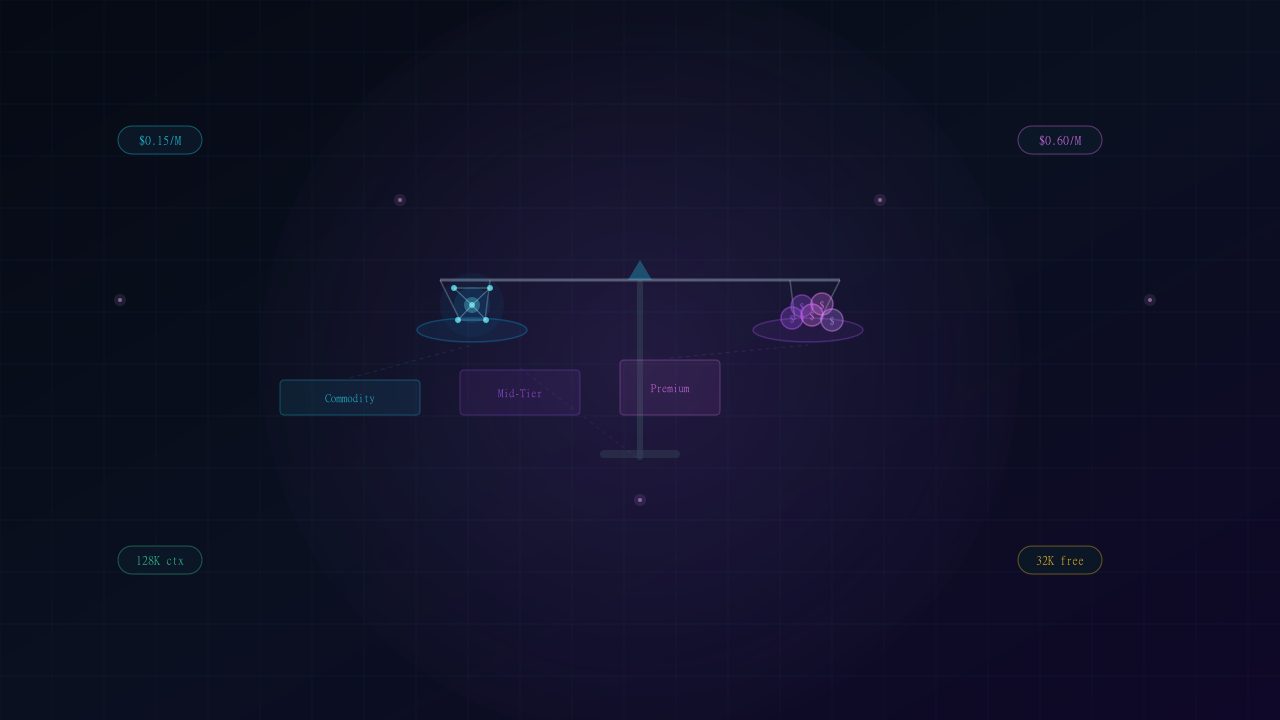
Most early-stage founders treat pricing as an afterthought — a number they set in a weekend and never revisit. That's a mistake. For AI startups, pricing is arguably your most powerful growth lever. The right number positions you against competitors, filters for the customers you want, and directly determines whether your unit economics work. In 2026, the teams that win aren't the ones with the best models; they're the ones that figured out how to price a SaaS product before the market forced them to.
Common SaaS Pricing Models
The classic models all have a place. Flat-rate pricing is simple but leaves money on the table — some customers underuse, others overuse. Per-seat pricing works well for software as a service collaboration tools where value scales with people. Usage-based pricing aligns what customers pay with the value they get, which is why it dominates AI products. Tiered pricing — a combination of plans with different feature sets and limits — is the safest starting point for most startups. Don't feel pressured to pick one forever: many successful companies start with tiers and add usage-based components as they learn how customers actually behave.
Why AI Startups Need to Think About Pricing Differently
AI startups need a fundamentally different mindset, and it comes down to one word: unit economics. Traditional SaaS has near-zero marginal cost per extra user — your infrastructure is mostly fixed. AI products don't. Every prompt you process, every token you generate, costs real money on a per-request basis. If your pricing ignores inference costs, you can grow revenue while losing more on every new customer. So your pricing model for startups in this space should have two goals: cover variable costs on day one, and give you room to profit as usage grows. Some founders build token budgets into each plan; others use strict usage-based pricing and let customers self-select. Either works — what doesn't work is pretending the cost isn't there.
How to Set Your Initial Price Point
Set your initial price point the way you'd set a product feature: with data and intent. Start by understanding what your target customer already pays to solve this problem — a competitor's tool, a freelancer, a manual process. Your price should be a fraction of the value you create, not a markup on your costs. Price to signal: too low reads as low quality and attracts churn-prone customers. A useful heuristic for early-stage is to undercut the obvious competitor by 20–30% while offering a clear differentiator, then raise once you have proof. And wherever you land, test it: run a small cohort at one price and another at a different price, and watch conversion, not just revenue.
When and How to Raise Prices
Raising prices is where most founders get nervous, but it's also where the biggest wins hide. Raise when you've added meaningful value since the last change, when your retention is strong, or when your customer base has become price-insensitive (they're getting obvious ROI). Increase prices for new customers first, then grandfather existing ones with a 30-to-90-day notice. Make it a regular cadence — annual reviews are standard for usage-based pricing in 2026. The customers who complain about a 20% increase were already at risk; the ones who stay are your real business.
Common Pricing Mistakes Early-Stage Founders Make
Three mistakes dominate early-stage pricing. First, pricing to beat the market rather than to capture value — you end up undercharging and can't invest in the product. Second, ignoring variable costs, which quietly kills AI margins. Third, being afraid to change: founders who never touch their pricing leave growth on the table out of fear of churn. If your pricing isn't occasionally uncomfortable, it's probably too low. Collect feedback, watch cohort data, and treat pricing as a living system rather than a one-time decision.
Conclusion
Pricing is a journey, not a launch-day decision. Pick a simple model that covers your AI costs, price against the value you create, test it with real customers, and raise with confidence as you prove that value. The best AI startup pricing in 2026 isn't a magic formula — it's a process you actually run. Start it now, and let your customers' behavior — not your nerves — set the pace.
Sources are linked inline where a claim depends on external reporting.
About the author
Priya NairPriya writes about machine learning systems, developer tooling and the regulation catching up to both. She previously worked as an ML engineer on production recommendation systems.
The Daily Wire
One email. Everything that mattered.
A tight morning briefing on technology, AI and gaming — written by our editors, sent at 07:00 UTC. No sponsored filler, unsubscribe in one click.
We only use your address for the newsletter. See our privacy policy.
Discussion (2)
- Ravi K.2 hours ago
The point about efficiency gains not translating into lower peak power is the part everyone misses. My last build tripped the PSU on transients despite being 200W under the rating.
- Helena W.5 hours ago
Appreciate that the recommendations include 'hold, buy a monitor instead'. Rare to read that in hardware coverage.
Related reading

How to Start an AI Tech Startup in 2026: A Step-by-Step Guide
You don't need to build your own AI from scratch anymore. Here's how founders are launching profitable AI startups in 2026 using existing infrastructure.

How to Pitch Investors as a First-Time Founder in 2026
Investors aren't evaluating your idea — they're evaluating you. Here's how to structure a pitch that gets the second meeting.
How to Validate Your Startup Idea Before Writing a Single Line of Code
Building something nobody wants is the most expensive mistake in startups. Here's how to test demand for almost no money — before you build.